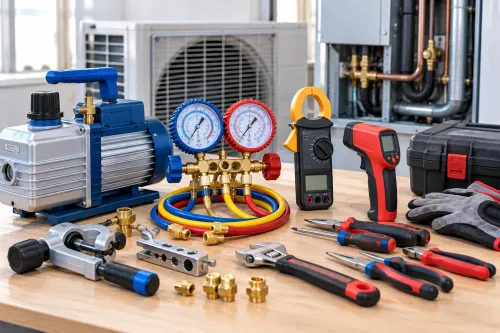


A vacuum pump removes air, moisture, and other non-condensable gases from a refrigeration circuit before charging. It is not intended to test for leaks, recover refrigerant, or compensate for poor installation practices.
Selecting vacuum pumps in Nagpur requires more than comparing motor size or litres per minute. Technicians should consider system volume, achievable vacuum, pump configuration, oil quality, maintenance needs, and field portability.
Understand Pump Capacity
Capacity is commonly expressed in cubic feet per minute or litres per minute. A larger pump can evacuate a system faster, but only when hoses, ports, and fittings allow sufficient flow.
Small split AC installations may not require the same capacity as cold rooms, chillers, or long commercial piping networks. An unnecessarily large pump can add weight and cost without providing a practical advantage on small systems.
The pump should be selected according to the typical system volume and working conditions.
Single-Stage and Two-Stage Pumps
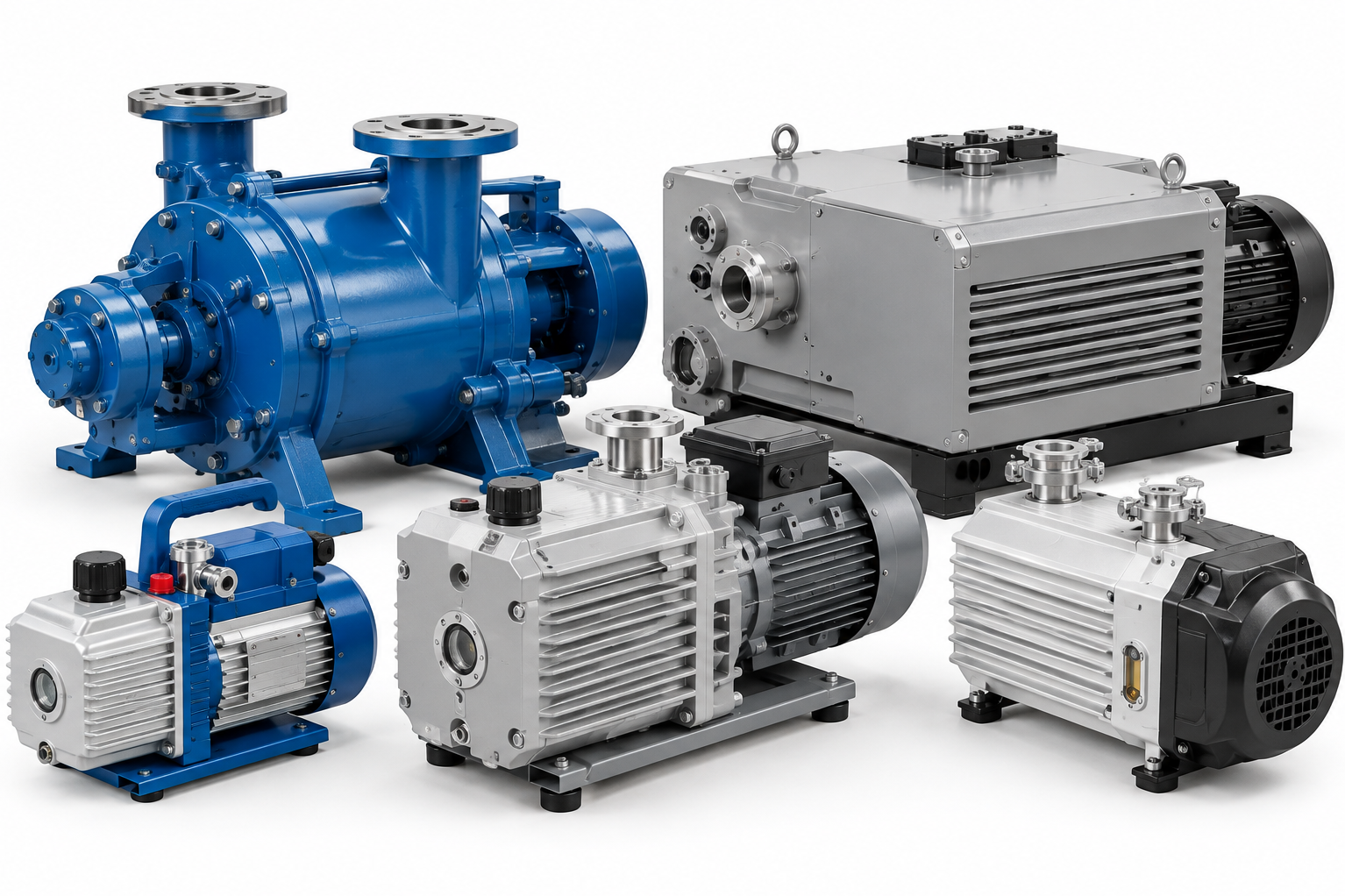
Single-stage vacuum pumps can be useful for basic service applications where the required vacuum level is moderate.
Two-stage pumps are designed to achieve a deeper vacuum and are commonly preferred for professional refrigeration and air-conditioning work. They can be particularly useful when moisture removal and dependable commissioning are priorities.
The pump specification should state its ultimate vacuum under defined test conditions. Real field performance will also depend on hose restrictions, connections, oil condition, and system tightness.
Why a Micron Gauge Is Important
A manifold’s compound gauge cannot confirm a deep vacuum accurately. A micron gauge gives a much more useful measurement of evacuation quality.
The gauge should ideally be connected away from the pump so it measures conditions in the system rather than at the pump inlet.
After reaching the target vacuum, isolating the pump and observing the pressure rise can help reveal remaining moisture or a possible leak. Interpretation requires experience because trapped refrigerant, temperature changes, and flexible hoses can influence the reading.
Check Serviceability and Oil Requirements
Vacuum-pump oil absorbs moisture and contamination during use. Dirty or saturated oil reduces pump performance and should be changed according to operating condition and manufacturer guidance.
Before purchasing, confirm:
- Recommended oil type
- Oil capacity
- Drain and fill accessibility
- Availability of replacement seals
- Inlet port sizes
- Gas-ballast provision
- Power requirement
- Weight and carrying arrangement
- Warranty support
A visible oil level indicator makes routine checking easier.
Match the Pump to Modern Refrigerants
Where flammable or mildly flammable refrigerants are involved, verify that the pump and associated working procedures are suitable for the application. Never assume that every existing tool can be used safely with every refrigerant.
Cool Care Corporation assists HVAC technicians and refrigeration contractors seeking vacuum pumps and related evacuation accessories in Nagpur. Buyers can obtain more relevant guidance by stating the systems they service, typical capacities, refrigerants, and desired field portability.
Final Readiness Check
Before placing an order, decide whether the pump will be used mainly for residential ACs, commercial refrigeration, automotive systems, cold rooms, or larger HVAC equipment. Confirm that suitable hoses, core-removal tools, adapters, vacuum oil, and a micron gauge are available.
For service professionals across Nagpur and Maharashtra, a correctly selected and properly maintained vacuum pump supports cleaner systems, stable performance, and more reliable commissioning.