

Choosing a refrigeration filter drier by line diameter or compressor tonnage alone can create pressure drop, flash gas, moisture damage, and repeat service calls. By the end, you will be able to compare drier types, match them to refrigerant and oil, size them for Nagpur operating conditions, and specify the installation checks that protect the system.
Key takeaways
- Match the drier to refrigerant, pipe size, flow direction and system capacity.
- Use a moisture-indicating sight glass to confirm dryness after installation.
- Replace a blocked, acid-loaded or moisture-saturated drier instead of cleaning it.
- Evacuate below 500 microns and confirm the vacuum holds before charging refrigerant.
What does a filter drier remove, and how is it different from other components?
A filter drier removes water, acids and solid particles from refrigerant as it passes through the circuit. Moisture can freeze at a capillary tube or expansion valve, while water reacts with POE oil to form acids.
A filter drier is not a receiver, evacuation method or substitute for repairing a leak; it cannot store liquid refrigerant, remove air from a system or stop new moisture entering.
- Acids attack motor windings, compressor bearings and other metal parts, shortening compressor life.
- Copper oxide, brazing scale and loose particles restrict capillary tubes, expansion valves and solenoid valves.
- Commercial cooling drier filters combine desiccant water capacity with fine filtration and, in selected designs, acid adsorption.
| Component | What it does | What it does not do |
|---|---|---|
| Filter drier | Removes moisture, acids and fine particles | Replace evacuation or leak repair |
| Sight glass | Shows liquid condition and moisture indication at one location | Remove contaminants |
| Refrigerant air dryer | Dries compressed air in an air system | Dry refrigerant inside a cooling circuit |
| Suction-line filter | Captures debris returning to the compressor during cleanup | Provide the same liquid-line moisture control |
| Strainer | Catches larger mechanical debris | Hold water with desiccant |
| Oil filter | Removes particles from compressor oil | Dry refrigerant or remove refrigerant-circuit moisture |
Which refrigeration filter drier type and core suit the job?
Choose a sealed-in-line liquid-line drier for routine moisture and particle control in a small or medium commercial system. Its solid core is compact and economical, but it is not the right answer for every failure history.
| Type or core | Best fit | Main caution |
|---|---|---|
| Sealed-in-line liquid-line drier | Routine moisture control and normal commissioning | Replace after major contamination; connection size alone does not prove capacity |
| Suction-line cleanup drier | Acid and debris after compressor burnout | Temporary equipment; monitor pressure drop, then replace or remove it |
| Bi-directional drier | Reversible heat pumps | Confirm ratings in both directions because check valves alter capacity and pressure drop |
| Replaceable-core shell | Large systems or repeated cleanup | Higher installation cost, but cores can change from moisture removal to acid removal or filtration |
| Standard molecular sieve | Routine moisture control | Match the core to the refrigerant and oil |
| Acid-removal core | Burnout or measurable acid risk | Do not leave a cleanup core indefinitely without checking system condition |
| High-water-capacity core | A system exposed to substantial moisture | Verify water capacity at the operating conditions |
| Cleanup core | Post-failure contamination and fine debris | Expect higher pressure drop than a routine core |
3A molecular sieve targets water removal; 4A and XH-series materials differ in water capacity, acid adsorption, filtration, pressure drop, and refrigerant compatibility. Treat no core as interchangeable without the manufacturer’s data.
For drier filter options commercial refrigeration in Nagpur, check the highest summer condensing condition. A standard liquid-line drier suits routine work; a replaceable shell suits large systems or repeated cleanup. Bi-flow approval is mandatory for reversible systems.
How do you size and verify a drier for a Nagpur refrigeration system?
Size by rated refrigerant flow, not pipe diameter or compressor tonnage alone. Check the manufacturer’s capacity table at the actual refrigerant, liquid temperature, condensing condition, mass flow, allowable pressure drop, evaporating temperature, and system tonnage. Connection markings show fit, not performance: compare nominal and actual capacity for flare, sweat, O-ring, and threaded ends.
An undersized drier can create flash gas before the expansion valve.
| Location or type | Sizing concern | Failure if undersized |
|---|---|---|
| Liquid-line drier | Capacity at design mass flow and liquid condition | Flash gas, starved expansion valve |
| Suction-line drier | Low suction-gas density and allowable pressure drop | Lower suction pressure and compressor capacity |
| Bi-directional or replaceable-core shell | Flow direction and core rating | Restricted reverse flow or overloaded core |
Verify these fields before ordering drier filters for refrigeration in nagpur:
- Confirm compatibility with R-134a, R-404A, R-407C, R-410A, R-448A, R-449A, R-290, or R-32, plus the specified POE or other oil.
- Check maximum working pressure, temperature range, flow direction, and the highest summer condensing pressure in Nagpur.
- Require explicit flammability-rated suitability for R-290 and high-pressure approval for CO₂; never assume a general-purpose model fits.
- Compare water capacity, acid capacity, filtration rating, pressure drop at design flow, connection type, and replacement-core availability.
What installation and commissioning checks prevent a new drier from failing?
A new drier fails when installation introduces moisture, oxide, heat damage, or the wrong flow path. Keep commercial cooling drier filters sealed until the moment of installation, then complete these checks:
1. Follow the arrow stamped on the shell. Match the tubing size, connection type, and service connection exactly; do not force a flare, sweat, O-ring, or threaded joint to fit.
2. Leave enough straight-line access to remove the drier later. Position the sight glass where you can read its indicator without dismantling panels or insulation.
3. Purge the pipe with dry nitrogen while brazing. This limits copper-oxide scale that can load the drier and reach valves. Shield the shell from torch heat, and never braze directly against an unprotected desiccant core.
4. For a replaceable-core shell, install the specified core, inspect its gasket and seating surfaces, tighten the cover to the maker’s torque, and confirm the shell’s flow direction. A loose cover or damaged gasket creates a leak that evacuation cannot fix.
5. Evacuate from both sides toward approximately 500 microns absolute, then isolate the pump and run a standing-vacuum test. Use the equipment maker’s limit if it differs.
A running pump proves only that it is pulling; leaks, trapped refrigerant, or restricted hoses can hide poor dehydration. A wet sight-glass indicator after commissioning means moisture remains at that location, caused by inadequate evacuation or a continuing leak.
What should you compare before buying drier filters for refrigeration in Nagpur?
Compare performance data, not the shell number or connection size alone. For drier filters for refrigeration in Nagpur, request a written specification at your refrigerant’s actual mass flow, liquid temperature, and allowable pressure drop.
Send the supplier this checklist:
- Water capacity and acid capacity
- Filtration rating and approved refrigerants and oils
- Nominal working pressure and maximum working pressure
- Pressure drop at design mass flow
- Operating temperature range
- Connection type and size
- Flow direction and bi-flow approval where required
- Replacement-core availability and the recommended replacement core
drier filter options commercial refrigeration in nagpur must also be checked against the system’s highest condensing condition. High summer condensing pressure can increase pressure drop and create flash gas before the expansion valve.
| Option | What it means | When it applies |
|---|---|---|
| Routine liquid-line drier | Moisture, acid, and particle control | Clean systems and normal component replacement |
| Burnout cleanup package | High-capacity acid/moisture liquid-line core, plus a monitored suction-line cleanup drier where pressure drop permits | Motor burnout or severe compressor failure |
| Replaceable-core shell | Core can be changed without replacing the shell | Large systems or repeated cleanup |
Confirm that a suction cleanup drier will be removed or replaced after the system is clean. Cool Care Corporation can help compare commercial refrigeration components when you provide the refrigerant, oil, connection, design conditions, and cleanup history—not just the pipe size.
Related product
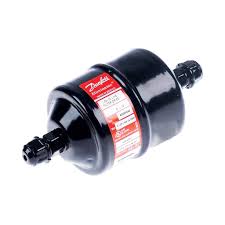 | Drier Filters Brand N/A Filter Type N/A Thickness Mm N/A Material N/A Usage/Application N/A Color N/A Flow Rate Cubic Meters Per Hour N/A Operating Temperature N/A... View product → |
Frequently asked questions
What does a refrigeration filter drier remove?
It removes moisture, acids and solid particles from refrigerant. A filter drier protects the expansion device, compressor oil and other circuit components.
Which refrigeration filter drier type suits a commercial system?
Choose a solid-core drier for standard sealed systems, a replaceable-core shell for larger systems or repeated contamination, and a burnout-rated core after compressor motor failure.
How do you size a drier for a Nagpur refrigeration system?
Match the drier connection size, refrigerant, cooling capacity, flow direction and manufacturer pressure-drop rating. Check capacity at the system’s actual evaporating and condensing conditions.
How do you verify a newly installed filter drier?
Pressure-test with dry nitrogen, evacuate below 500 microns, confirm the vacuum holds, check for leaks, and inspect the moisture indicator after commissioning.
What should you compare before buying drier filters for refrigeration in Nagpur?
Compare refrigerant compatibility, core material, water and acid capacity, rated flow, pressure drop, connection type, temperature range, replacement availability and documentation.