

A freezer that looks large on a catalogue page can lose usable space to baskets, compressor housings, air gaps and poor loading access. By comparing cabinet design, merchandising needs, temperature performance and Nagpur installation conditions, you can match the freezer to your products and buying pattern instead of choosing by litre capacity alone.
Key takeaways
- Choose glass-top cabinets when customers need fast product visibility.
- Use chest freezers for dense reserve storage and lower heat gain.
- Verify usable litres, −18°C performance and power requirements before buying.
- Confirm installation, spare parts and service response across Nagpur.
Which deep-freezer type fits your business model?
Match the cabinet to the job: an ice-cream retailer needs fast product visibility, while a distributor needs dense reserve storage. The right deep freezer for types compared in Nagpur depends on whether customers select from the cabinet or staff retrieve cartons from it.
| Business model | Best-fit cabinet | Why it fits |
|---|---|---|
| Ice-cream retailer | Glass-top display or island freezer | Shows tubs and supports self-service; use baskets or dividers to separate flavours. |
| Frozen-food shop | Chest freezer with sliding glass lids | Holds cartons efficiently while keeping products visible and cold during short openings. |
| Restaurant | Upright freezer with solid door and adjustable shelves | Speeds access to ingredients and supports FIFO rotation in a narrow back-of-house area. |
| Supermarket | Island display freezer plus solid-top reserve freezer | The display unit sells product; the reserve unit prevents overloading and slow temperature recovery. |
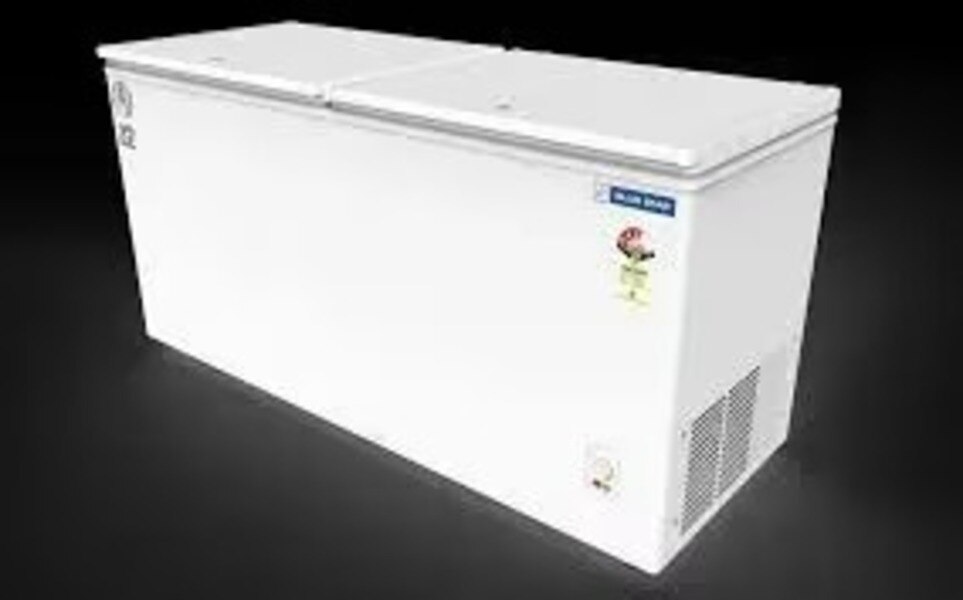
| Distributor | Solid-top chest freezer | Maximises bulk storage and retains cold air better than an upright during frequent loading. |
| Wholesale warehouse | Large solid-top chest or cold-room storage | Suits pallet-scale inventory; choose a freezer built for loading equipment and long holding periods. |
Glass doors improve browsing but lose more cold air at each opening. A solid lid saves energy and protects reserve stock, but cartons at the bottom slow picking. Choose a convertible model when seasonal demand changes from storage to display; otherwise, separate display and reserve cabinets.
In Nagpur, verify the stated ambient test condition before buying, because a cabinet rated for moderate room temperatures can struggle in a hot, non-air-conditioned shop.
Chest or upright: which design gives better access and stock control?
For deep freezers for retailers in Nagpur, choose a chest cabinet when cold retention and reserve storage matter more than picking speed. Choose an upright when narrow aisles, product visibility and rapid stock rotation matter more than door-opening discipline.
| Design | Floor space and access | Cold retention and stock control |
|---|---|---|
| Chest | Uses more floor area but stores cartons efficiently; bottom stock is slow to reach | Loses less cold air during lid opening; baskets and labelled layers improve FIFO |
| Upright | Uses less floor space and gives faster access at eye level; shelves reduce stacking depth | Door openings, damaged gaskets and blocked airflow slow temperature recovery; clear date order supports FIFO |
A chest freezer loads quickly for bulk replenishment, but cartons stacked two or three layers deep hide older stock. Put newer cartons at the rear or bottom only after moving older cartons forward, and use removable baskets for small or frequently picked items.
Never exceed the manufacturer’s loading line; static cooling creates colder zones near the evaporator.
An upright freezer usually gives better product access and FIFO rotation because every shelf is visible. It also needs a strict door routine: group similar products, shut the door between picks and avoid leaving gaps that block evaporator airflow.
For a restaurant, distributor or wholesale warehouse, chest storage usually suits reserve stock. A supermarket or busy frozen-food shop may gain more from upright access, provided staff manage doors and shelf replenishment consistently.
When do glass-top, island and convertible freezers justify their cost?
Choose storage equipment when frozen stock waits for sale; choose display equipment when customers need to see and select it. A solid-top bulk freezer protects reserve inventory from warm air and usually uses floor space and energy efficiently. Using a display cabinet as the entire reserve store causes overloading, poor temperature recovery and untidy rotation.
| Option | Selling benefit | Stock-control trade-off | Justifies cost when |
|---|---|---|---|
| Solid-top freezer | Maximum insulation and compact bulk storage | Products at the bottom are slower to reach | Restaurants, distributors and wholesale warehouses hold reserve cartons |
| Glass-top freezer | Customers see products without opening the cabinet | Glass gains heat from lighting and sunlight and can condense | Retailers sell directly from the freezer |
| Island freezer | Two-sided access and strong product presentation | More exposed surface and less secure reserve capacity | Supermarkets have central aisles and high customer traffic |
| Convertible freezer | One cabinet can change between storage and display duties | Higher purchase cost and mode changes require disciplined loading | Seasonal retailers need display space in one period and reserve storage in another |
Your comparison of commercial deep freezer options in Nagpur should include the fittings, not only the cabinet. Sliding glass lids suit frequent customer access; hinged lids seal quickly but need clearance above the unit. Baskets keep fast-moving items reachable, while dividers separate brands or pack sizes and support FIFO rotation.
Adjustable shelves improve visibility in convertible upright models, but blocked shelves restrict airflow. Choose a solid lid for back stock and a glass lid only where visibility earns sales.
Which capacity and temperature figures should you verify before buying?
Compare usable litres, not the headline gross capacity. Evaporators, internal steps, compressor housings and basket clearance reduce the space available for stock. Record the number of baskets and each basket’s dimensions, then calculate how many cartons or tubs fit below the recommended loading line.
| Figure | What to verify | Why it matters |
|---|---|---|
| Gross versus usable capacity | Usable litres, basket count and basket dimensions | Prevents a large cabinet from holding less saleable stock than expected |
| Product temperature | Loaded range, such as −18 °C to −25 °C for ice cream | An empty cabinet reaching −18 °C proves little about product quality |
| Recovery and pull-down | Time to reach target temperature after loading and repeated lid openings | Slow recovery causes soft product and temperature swings |
| Energy use | kWh under the manufacturer’s declared test condition | A bigger compressor can recover faster while increasing running cost and starting current |
| Ambient suitability | Rated ambient temperature and loaded test condition | A moderate-ambient model can struggle in a hot, non-air-conditioned shop |
Ask for a loaded temperature test, not one probe reading. Static cooling creates colder zones near the evaporator and warmer areas near the front or top, so confirm the loading line and permitted product position.
For commercial deep freezer options in nagpur, also test operation in the actual installation space, away from direct sun, ovens and blocked ventilation.
How should Nagpur buyers assess installation, service and supplier support?
A unit rated for moderate ambient conditions can lose pull-down speed and temperature stability in Nagpur’s hot season. Ask for the declared ambient test condition and loaded product temperature; reject a model that is unsuitable for a non-air-conditioned shop, direct sunlight, or proximity to an oven.
Leave the manufacturer’s specified clearance around the condenser and never box the cabinet into a tight counter. Restricted airflow raises running cost, lengthens recovery after lid opening and can shorten compressor life. Compare recovery time, energy consumption and starting current, not compressor horsepower alone.
Specify the refrigerant in the purchase order. R290 (propane) can deliver good efficiency and low environmental impact, but it is highly flammable; servicing, recovery, charging and electrical-part replacement require the manufacturer’s procedure. Choose a deep freezer supplier in Nagpur whose technicians can work safely with the installed refrigerant.
Before paying, get written confirmation that these parts are available:
- Exact thermostat or controller
- Lid gasket and hinges
- Baskets
- Condenser fan, where fitted
- Relay, overload and compressor
Ask for the summer response time and escalation contact. A low-priced freezer becomes expensive when a failed gasket or start device leaves frozen stock unsaleable for days. Cool Care Corporation can be included in your comparison, but judge every quote by documented specifications, local parts access and service commitments rather than catalogue breadth.
Related product
 | Deep Freezers Size N/A Type N/A Brand N/A Capacity N/A Temperature Range N/A Power Consumption N/A Number of Doors N/A Model Name/Number N/A Refrigerant Used N/A... View product → |
Frequently asked questions
Which deep-freezer type fits a retail or wholesale business in Nagpur?
Choose a glass-top or island freezer when customers select products directly. Choose a chest freezer for dense reserve storage, and an upright freezer when staff need organised access to cartons and shelves.
Is a chest or upright deep freezer better for access and stock control?
Chest freezers usually provide efficient bulk storage but require baskets, labels and stock rotation to prevent products being buried. Upright freezers offer clearer shelf-by-shelf access and faster counting, but they need more floor height and careful door management.
When are glass-top, island and convertible freezers worth the extra cost?
Glass-top models justify their cost when product visibility drives sales. Island freezers suit open retail layouts and customer access. Convertible models make sense when you need to switch between chilled and frozen storage, provided the unit reaches the required temperature consistently.
Which capacity and temperature figures should buyers verify?
Check usable internal volume rather than headline capacity, operating temperature, pull-down time, energy input, voltage, door or lid dimensions and the load rating. Frozen products should remain at −18°C or colder, with performance checked under your expected ambient conditions.
How should Nagpur buyers assess installation, service and supplier support?
Confirm delivery access, ventilation clearance, stabiliser or voltage-protection requirements, commissioning, warranty terms, service coverage, response times and the availability of thermostats, fan motors, compressors, gaskets and control boards in Nagpur.