

When a refrigerator needs repair, buyers are often asked to choose between a genuine component and a compatible replacement. The less expensive option may appear attractive, but price alone does not reveal whether the part will fit correctly, communicate with the appliance electronics, or perform reliably.
Evaluating spare parts for a refrigerator in Nagpur requires attention to compatibility, expected service life, application risk, and total repair cost.
What Is a Genuine Refrigerator Part?
A genuine part is supplied by the appliance manufacturer or through its authorised supply chain. It is generally designed for a particular model or approved range of models.
Advantages may include:
- Confirmed fitment for listed models
- Correct electrical characteristics
- Consistent connector and mounting design
- Easier identification through official part codes
- Manufacturer-backed quality controls
The main limitations can be higher prices and limited availability for older refrigerator models.
What Is a Compatible Part?
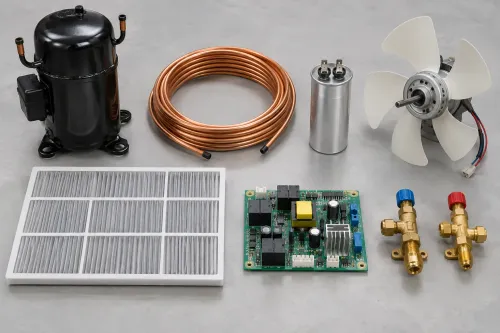
A compatible part is manufactured by a third party to perform the same function as the original. Compatible thermostats, relays, sensors, fan motors, door switches, and other components are widely used in appliance repairs.
A good compatible part can offer practical value when its specifications genuinely match the application. Quality, however, varies between manufacturers.
Technicians should examine the electrical rating, materials, dimensions, terminal arrangement, temperature range, and supplier support instead of relying only on a statement that the part is universal.
Where Compatibility Matters Most
Some refrigerator parts allow greater flexibility than others. A mechanically suitable door switch or correctly rated overload protector may be relatively straightforward to match.
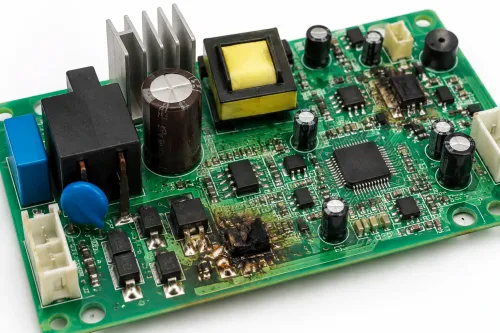
Electronic components demand more caution. PCB boards, inverter modules, display panels, sensors, and variable-speed fan motors may use model-specific communication or calibration.
Sealed-system components also affect refrigeration performance. Compressors, capillary tubes, filter driers, and refrigerant controls must suit the refrigerant and capacity of the appliance.
Compare the Total Repair Cost
A low-priced part is not economical if it causes a repeat visit or damages another component. Buyers should consider:
- Purchase price
- Installation time
- Expected operating life
- Risk of repeat failure
- Warranty terms
- Availability of technical support
- Consequences of refrigerator downtime
For a domestic refrigerator, downtime may lead to food spoilage. For a shop, laboratory, restaurant, or healthcare facility, the consequences may be considerably greater.
Questions to Ask Before Purchase
Before selecting a replacement, ask whether the part is suitable for the exact refrigerator model and whether any technical data is available.
It is also useful to confirm:
- Whether the component is new or refurbished
- Whether the stated warranty covers functional defects
- Whether electrical parts can be returned after installation
- Whether the supplier can cross-reference old part numbers
- Whether installation instructions are available
- Whether the part suits the refrigerant used in the system
Clear return and warranty conditions are particularly important for electronic components.
A Practical Selection Approach
Use genuine parts when model-specific operation, safety, or electronic communication makes substitution risky. A well-made compatible component may be reasonable for an older appliance or standard application when every important specification has been verified.
Technicians working in Nagpur and across Maharashtra should also consider supply continuity. Selecting a dependable part that can be sourced consistently may help service centres standardise repairs and manage customer expectations.
The right choice is not automatically the most expensive or the cheapest. It is the component that matches the refrigerator, performs safely, offers reasonable durability, and gives the repair professional confidence in the completed work.